|
Assembly Load modes |
Scroll |
Assembly load types are divided into System and Custom.
System load modes are available in an assembly by default. If you select one of them, all assembly components will be assigned the same load mode (see Fig. A). The following system load types are available in each assembly: Full, Empty, Simplified, Partial, Size (see section System Load Modes).
A custom assembly load mode is a combination of load modes for the assembly components composed by the user and stored in this assembly. For example, you can select the loading type Full only for the subassembly with which work is run at the given moment, and Empty for all other components. If you need to see the location of these components in the assembly, you can apply Partial, Simplified or Size load types to them. An example of a custom load mode is shown in Fig. B. Custom load modes are used to load various components in different ways and/or disable editing them.
|
|
a) |
b) |
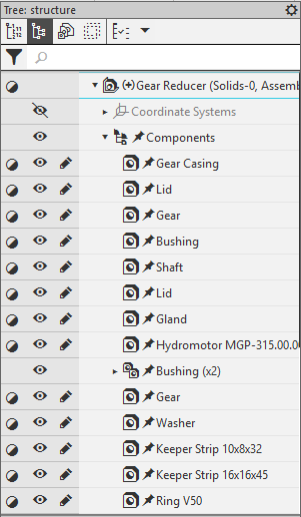
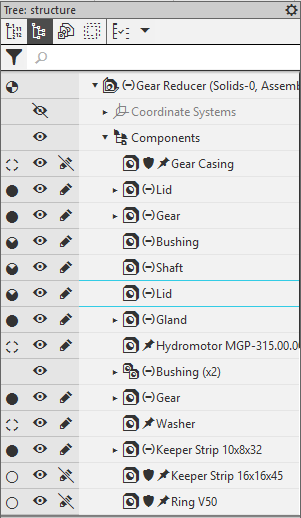
Examples of assembly load modes:
a) system simplified, b) custom
The load mode selected for the assembly is considered applied. By default, this is a system load type Full. You can select another load mode, either system or custom. To learn about applying load modes, see section Select Assembly Load Mode.
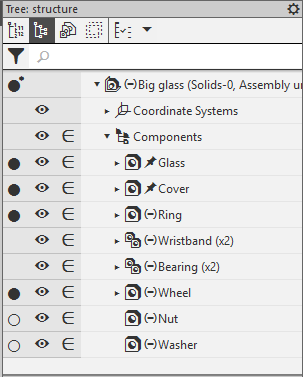
You can also change the load mode of one or more components in the current assembly session. In this case, the assembly load mode icon will be marked with an asterisk (*), as shown in the figure below.
|
An asterisk above the load mode icon appears not only after the user has changed the component load mode (see section Select Component Load Mode), but also in the case of automatic change from partial load to full load (see section Notes on Components with Partial Load). |

You can save the changed load mode later, or you can choose not to save it. If a custom load mode is applied in the assembly, saving will change its parameters, and in case of a system load mode, a new custom load mode will be created (see section Create a Custom Load Mode When Saving the Document).
|
Display of the assembly load type in which a load type for a group of components is different from the applied one. |
You can assign password protection for any assembly load mode (see section Passwords of Load Modes).